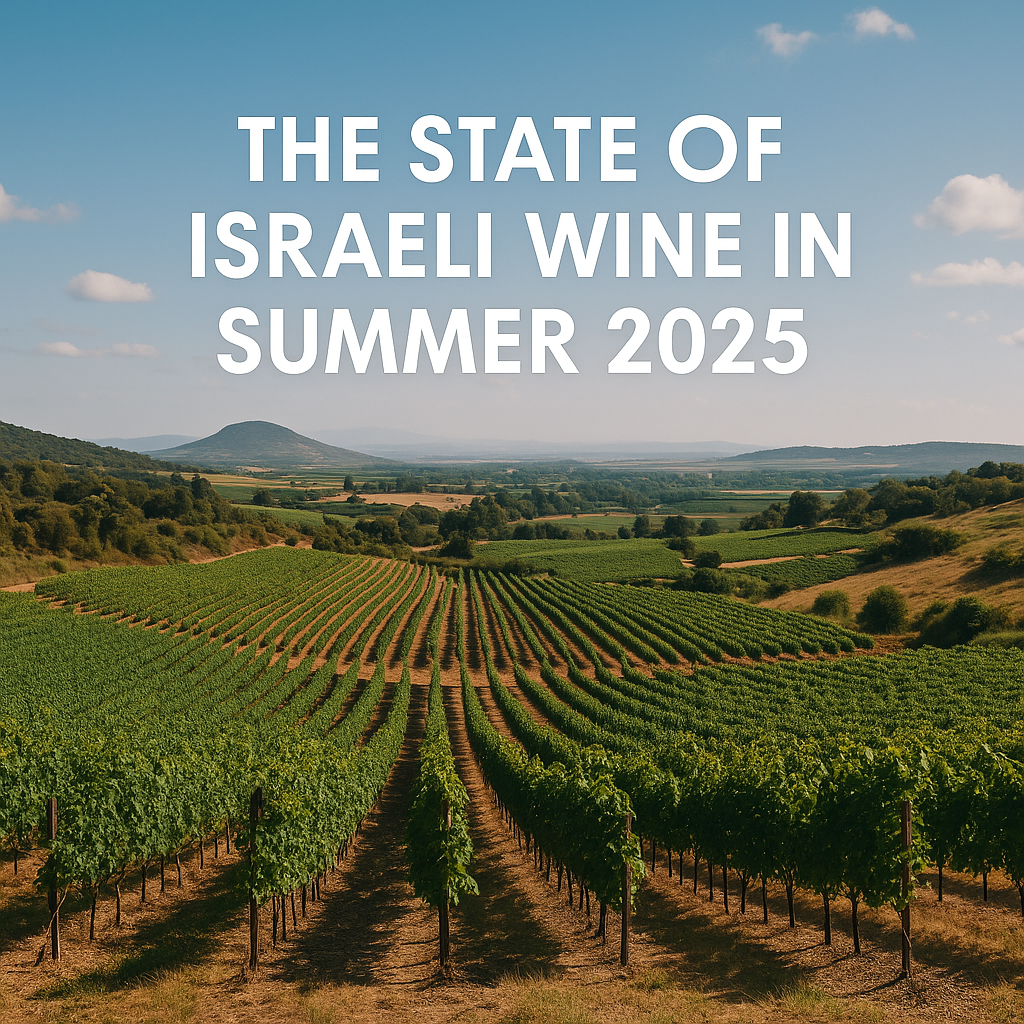
As we are in the summer 2025, Israel’s wine landscape has matured into an industry defined by quality, resilience, and global ambition—unanchored from earlier seasonal themes.
1. Growing Exports and Rising Production
Israeli wine exports soared from $26.7 million in 2011 to $57.3 million by 2023, marking more than a 100% increase. That growth reflects improvements in varietal quality, critical acclaim abroad, and stronger distribution channels. Israel now supports over 300 wineries, collectively producing approximately 40 million bottles annually.
2. Security Pressures—and Strategic Adaptation
Due to occasional rocket alerts in the Galilee and Golan regions, tourism dipped in early 2025. However, many wineries adapted by scaling up direct-to-consumer inventory channels, boosting their online presence, and intensifying domestic marketing—effectively stabilizing revenue despite reduced on-site visits.
3. TerraVino Success Showcases Global Quality
At TerraVino 2025, Israel made headlines with 22 Double-Gold medals out of 32 awarded worldwide, underscoring exceptional craftsmanship. In total, 712 global entries were judged, 398 from Israeli producers. Notable winners included Jascala, Dadah, Kamisa, and Recanati.
4. An Active Summer Tasting Calendar
This July–August, vineyards and trade groups are hosting several prominent events: the “White Festival” in Jaffa (featuring Chardonnay and Gewürztraminer) and Spanish-themed comparative tastings—signs that Israel’s wine season has extended well beyond traditional holiday gatherings.
5. Sustainability as Innovation
Leading wineries like Tabor, based in the Upper Galilee, continue investing in drip irrigation, biodiversity plantings, native yeast fermentation, and eco-packaging. Tabor, founded in 1999, has been recognized for combining quality with ecological mindfulness. Its eco-friendly Eco Red blend further demonstrates this approach.
Conclusion
By mid-2025, Israeli winemaking reflects four central realities: export growth, adaptability under duress, global awards recognition, and tangible sustainability—marking it as a modern, competitive global player.

