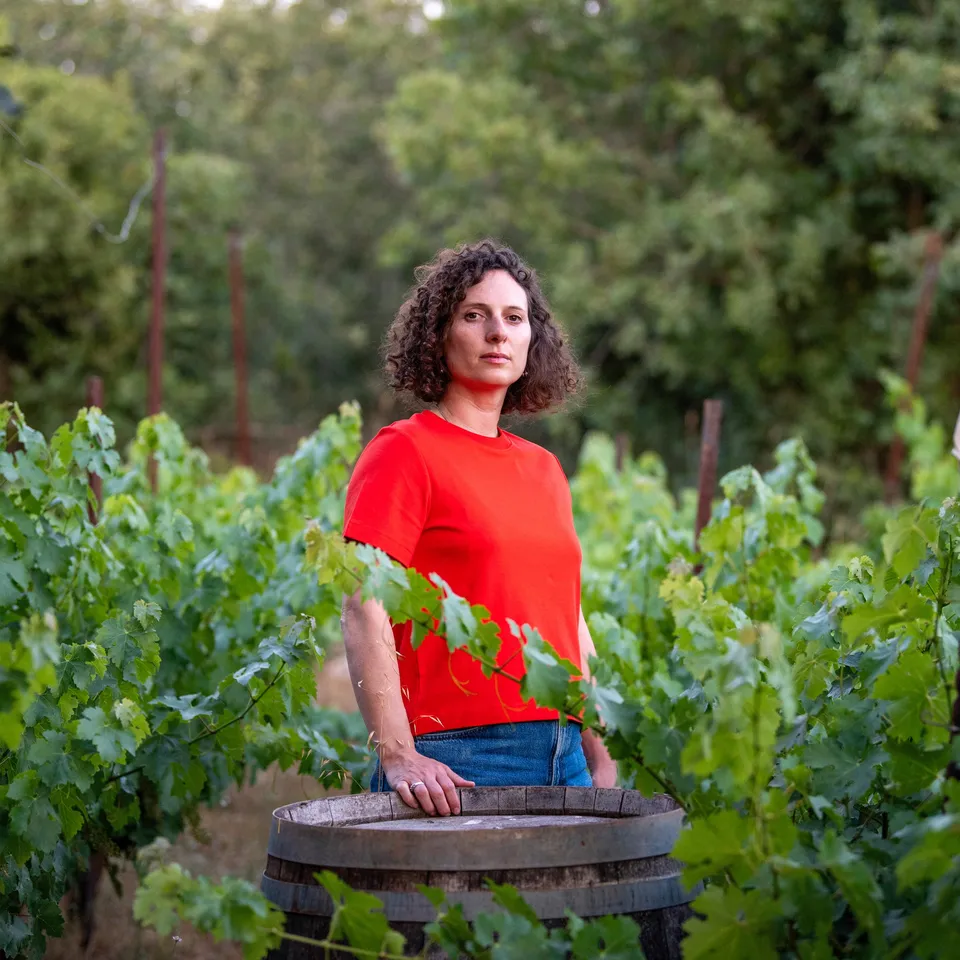
In the vibrant culinary landscape of Israel, a quiet but profound shift has been underway in the world of wine, largely championed by Natalie Shafrir. She has been instrumental in introducing and popularizing natural wine, transforming it from a niche concept into a celebrated movement embraced by a growing number of enthusiasts and establishments. This journey into natural wine began for Shafrir with a fundamental re-evaluation of food’s role in human connection, a perspective that ultimately shaped her pioneering efforts in the Israeli wine scene.
A Journey of Discovery: Food, Community, and the Epiphany of Natural Wine
Natalie Shafrir’s understanding of food evolved significantly during her military service, where she realized that sustenance was more than just basic survival; it was also, in her words, “a tool of control.” This insight propelled her to travel alone to Italy after her service, immersing herself in local cultures through couch surfing and sharing meals with strangers. It was during this period, while eating a simple plate of pasta, that she experienced a profound revelation: food served as a powerful force for belonging and community. She observed how significant life decisions often unfold around a table, illustrating that meals are not merely about nourishment but are ceremonial, linguistic, and crucial social mechanisms. She explained that in Italy, social life is almost non-existent if one does not sit down at a table to eat.
This deeper understanding—that food acts as an emotional and cultural infrastructure—became a central focus for her life. She pursued this interest at the University of Gastronomic Sciences in Bra, Italy, an institution linked to the Slow Food movement, founded by Carlo Petrini. This institution became a global center for the study of food culture and its connection to the environment, identity, and politics, attracting students from around the world.1 Shafrir described it as a “Hogwarts of food,” where she learned about coffee from a colonialist aspect and cheese not from bacteria, but from the family that makes it or the structure of the cowshed. She perceived it as looking at food broadly, not just as technique but as a social, political, and cultural structure.
Despite extensive exposure to wine during her studies, it wasn’t until a Georgian student urged her to visit his homeland that wine truly captivated Shafrir. Georgia, a country that has reclaimed its ancient viticultural heritage and seen its wine culture recognized by UNESCO as an intangible cultural heritage, is considered the cradle of natural wine.2 During a natural wine festival there, Shafrir was captivated by the diverse gathering of journalists from major international newspapers, renowned chefs, sommeliers from top restaurants, farmers, and producers. This experience profoundly altered her perception of wine. She felt as if she had truly tasted wine for the first time, realizing it was a product far different from what she had previously understood or what had been presented to her over the years. Her perception was completely transformed during her six-month stay in Georgia, where everything she knew academically about natural wine suddenly “fell into place.”
Understanding Natural Wine: A Philosophy of Minimal Intervention
For Shafrir, natural wine embodies a philosophy of “minimum intervention,” as explained by its slogan: “nothing added, nothing taken away.” It’s about crafting wine solely from grapes, without the addition or removal of substances. However, she emphasizes that natural wine is much more than just a technique; it’s a reflection of the producer. In natural winemaking, the vintner is deeply connected to the entire process, acting as both the farmer who cultivates the grapes and the artisan who oversees harvesting, fermentation, and bottling.3 The essence, in her view, lies in the vintner’s decision not to intervene excessively or attempt to control the natural outcome of the wine.
This approach aligns with a global trend that began about two decades ago and gained significant momentum over the past ten years. Shafrir joined this movement by beginning to import natural wines into Israel, sourcing them from countries like Georgia, Italy, Austria, and France. She maintains close contact with producers, visiting wineries and being highly selective about the wines she chooses for the Israeli market. While she wasn’t the very first to import natural wines to Israel, her actions undeniably positioned her as a catalyst for change. She discreetly spearheaded a revolution, transforming what was once a marginal phenomenon into an increasingly popular choice in Israel’s haute cuisine restaurants and burgeoning wine bars, which have themselves become a significant urban phenomenon.
Natural Wine’s Ascent in Israel: More Than Just a Trend
Natural wine’s growing popularity in Israel has prompted discussions about its place within the broader wine industry, including questions about whether it’s merely a fashionable beverage. Shafrir firmly asserts that natural wine is not just another trendy drink for “left-wing hipsters and Tel Avivians,” strongly refuting such suggestions. For her, it represents a new paradigm that redefines wine, moving it away from being an anachronistic, elitist, and expensive product, and instead making it more accessible to a younger generation. It also brings crucial conversations about sustainability and the environmental crisis directly to the wine list.
Shafrir’s personal journey further highlights the profound impact of natural wine. Born in Toronto 36 years ago, her family returned to central Tel Aviv when she was five. Her upbringing was immersed in city life and characterized by a “rock ‘n’ roll” childhood and teenage years spent in local clubs and bars, with food always central to her home life. She remained in the city, finding her army service to be a “culture shock and an interesting encounter with Israeli society.” While her studies in Italy were engaging, her stay in Georgia proved to be a true “epiphany.” There, she worked at wineries, but primarily focused on writing about the country and its cuisine.
Upon returning to Israel, Shafrir initially engaged in many wine and food-tasting events, connecting with cooks, and she did not initially consider selling wine. She simply thought that natural wine would be “another tool in her toolbox,” not imagining she would start an importing business. However, when she arrived with the first bottles, reactions varied widely. Some responses included “laughter”—with people telling her she was “a romantic and would go bankrupt”—while others expressed “genuine excitement.” Individuals who had experienced natural wine abroad were particularly pleased to discover it suddenly available in Israel, finding that it “touched people.”
The Asis Initiative: Purity, Authenticity, and a Bold Mission
So, Shafrir made the bold decision to take a risk. In December 2019, she launched the Asis initiative for importing natural wines. Her venture is built on a commitment to supporting small producers who cultivate grapes organically and biodynamically, employing manual harvesting methods. The wines imported under the Asis initiative are characterized by their purity: they are made with “no additives, no preservatives.” Fermentation occurs spontaneously, relying on the natural yeast found on the grape skins (spontaneous fermentation), and crucially, they are produced “without the addition of sulphites, acids, or sugar.”
The resulting wines are often described as coarse, sometimes murky, wild, or even sourish. They can vary significantly from one bottle to the next, reflecting their dynamic nature and intimately connecting them to their specific place of origin and the individuals who produced them.4 As Eric Asimov, The New York Times’ wine critic, describes such wines, they are “unpredictable but alive, energetic, vibrant and surprising,” akin to comparing “fresh cherries picked off a tree to red Life Savers.”5
Shafrir’s initial three years in the industry proved challenging. She encountered resistance, noting that “female sommeliers were less receptive” to her and that it took time for “a few wine people” to open their doors. However, she holds no resentment, acknowledging that “a lot of water has flowed under the bridge since then; everybody is fighting their own battle.” She fondly remembers the few who genuinely “saw” her and “opened the door when it wasn’t clear where this was going.” Despite some disparagement of natural wine itself—with comments like it “wasn’t wine,” that it was “spoiled,” or that “there was no such thing as orange-colored wine”—Shafrir felt respected because she “came with knowledge,” and in the wine world, “knowledge is power.” She acknowledges experiencing common male-female dynamics typical in any industry, with some men telling her, “You’re cute, but you don’t know about wine.”
Shafrir describes the industry as “very small, masculine, white and wealthy.” She worked tirelessly, initially feeling “very naive and vulnerable,” and admits there were times when things “hurt,” like the “absence of support sometimes.” She felt she had “put her heart on the table” and that it wasn’t understood. She began her venture without “money from home or with investors,” taking “a tremendous risk,” doing “everything alone.” Yet, she maintained a clear objective: the message of natural wine. For her, it wasn’t just about being a pioneer in making natural wine popular in Israel, but a “mission, like a crusade, to run with the message.” Today, she observes that people are more open to natural wine because it is perceived as healthier, more interesting, and aligns with a desire to broaden horizons.
Educating the Palate: A Cultural Phenomenon and a Way of Life
Shafrir recognized the need to educate consumers about natural wine. It’s not a wine that typically elicits “love-at-first-sight”; it often requires explanation and a re-education of the palate. She understood that she “couldn’t give people the wine and tell them: Drink and enjoy.” Instead, “You had to explain, almost reteach how to drink.” She believes it’s insufficient to simply say it’s tasty. Consumers need to “realize that you’re part of a chain”—comprising the grower, the producer, and the consumer as one of the “way stations.” Without an explanation, a story, and awareness, the experience is simply “not enough.”
It’s no coincidence that Shafrir uses these terms. The trend of natural wines has not only revived forgotten winemaking traditions and spotlighted sidelined grape varieties beyond common ones like Chardonnay, Cabernet Sauvignon, and Merlot. It has become a significant cultural phenomenon, challenging the mainstream notion of wine as purely a luxury product. This shift coincides with a decade of increasing scrutiny of the food and wine industries, prompting questions about blind consumption and overly processed products. In today’s world, younger generations are showing a preference for healthier food and a desire to understand the origins and producers of their products. Within this context, natural wine has emerged as a powerful statement about community and sustainability.
Shafrir recalls her initial perception of wine as “a high-class product with a heavy intellectual connection – something belonging to knowledgeable people, not something common, not something that everybody drinks.” Her time in Italy transformed this view, as she realized wine could be as accessible and fundamental as olive oil, coffee, or chocolate—something deeply understood but also simply enjoyed. She emphasizes that natural wine is made by small producers using simple, manual methods, imbued with intention. It is a drink for farmers, a daily staple, part of the “holy trinity of bread, olive oil and wine.” Despite this, she acknowledges that the traditional wine world can often feel like a “closed club.”
However, she firmly believes that natural wine actively “trying to open the door.” It embodies a distinct spirit, fostering a “mentality of community, of togetherness, of something more accessible.” She draws parallels with the Slow Food movement, noting that both communities grew in parallel, representing groups of people who chose an alternative path, returning to tradition and creating a new way forward. This community continues to expand. For Shafrir, natural wine is not merely a taste but an “attitude” and “gastronomy at eye level.”
She steadfastly rejects the idea that natural wine is just a fleeting “fashion.” While she acknowledges that large industrial wineries and importers creating “natural wine lines” might be driven by fashion (“that’s a fashion”), for those genuinely involved in natural wine, it is “a way of life.” She explains that these individuals extend this philosophy to their eating habits, clothing choices, and even how they raise their children. Shafrir believes that one cannot truly embrace both industrial practices and natural wine principles simultaneously, arguing that a true commitment goes beyond mere economics. She openly states her conviction that natural wines are “better wines in what they do to the body,” or “less harmful,” and are “more pleasant and less damaging to the environment and to the people who produce them.”
Shafrir acknowledges that her entry into the wine world was a direct challenge to its established norms. Her rejection of classic wine terminology—focusing on barrel aging, specific grape varietals like Cabernet Sauvignon, Merlot, and Chardonnay, or famous regions like Tuscany and Bordeaux—has, as she puts it, “angered a lot of people in the local wine industry.” She understands the antagonism her message might provoke, noting that when she says, “I’m bringing over natural wine,” the “connotation is actually, ‘Wait a minute, is there wine that isn’t natural?'” This, she explains, causes many producers and importers to “immediately went on the defensive.” She emphasizes that “Against my will, in what I’m doing, I’m shedding light on them, too.” She found this challenging, particularly when dealing with “older and more conservative people,” but notes that she “came with knowledge” and feels respected.
Natalie Shafrir’s dedication has fundamentally contributed to the evolving appreciation of natural wine in Israel. Her efforts have fostered a deeper connection between consumers and the origins of their wine, championing sustainability and community within the burgeoning Israeli wine scene. Her mission has genuinely transformed the Israeli wine landscape, moving it towards a more inclusive, conscious, and vibrant future.
Source:
- Haaretz article: “She Brought the Gospel of Natural Wine to Israel. Some Try to Spoil It” by Rotem Maimon, published July 20, 2025, available at:
https://www.haaretz.com/food/2025-07-20/ty-article-magazine/.premium/she-brought-the-gospel-of-natural-wine-to-israel-some-try-to-spoil-it/00000198-276c-d595-a3f9-a77d524e0000
Photo Credit:
- Natalie Shafrir in the Harashim winery in northern Israel. Credit: Gil Eliyahu (as per Haaretz article)

